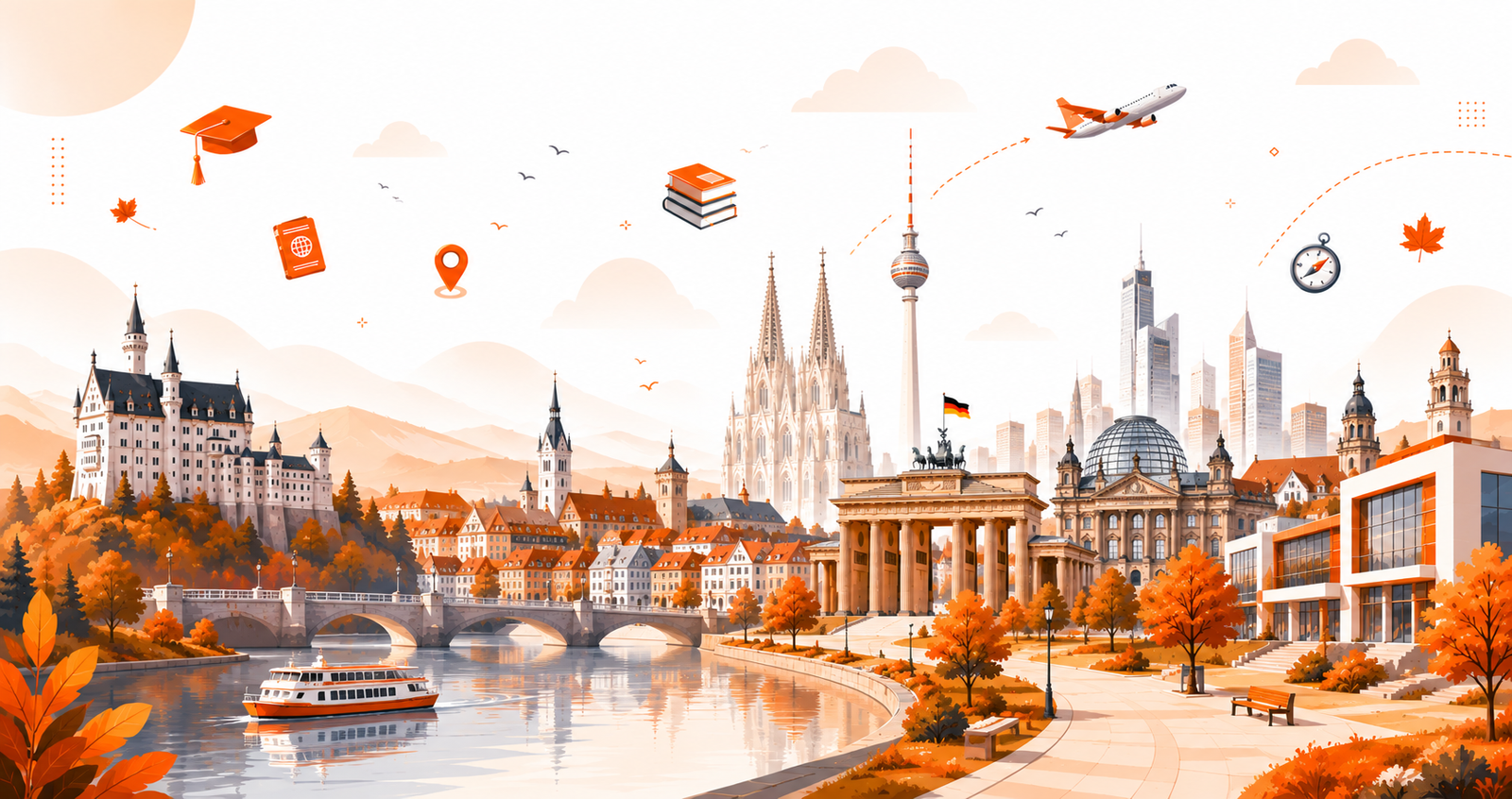
Germany's name has been tied to engineering excellence for well over a century, and its universities remain central to that legacy. Institutions across Munich, Berlin, Aachen and beyond combine deep academic tradition with substantial investment in research, producing graduates who move seamlessly into some of Europe's most demanding industries. Public universities charge little to no tuition even for international students in many federal states, a policy that has made German higher education one of the more accessible routes to a European qualification. Teaching leans heavily on theory paired with laboratory and workshop practice, particularly in engineering, computer science and the natural sciences. Germany's economy, anchored by manufacturing and technology, gives graduates a clear line between their studies and the job market. For students drawn to precision, structure and a long academic tradition, Germany offers a serious, substance-first education. Duvera Immigration supports applicants through university applications and German student visa requirements.



Mechanical Engineering is one of Germany's most iconic fields of study, reflecting the country's global reputation for precision manufacturing and engineering excellence. Students study thermodynamics, materials science, robotics and product design, often through hands-on laboratory work and close collaboration with Germany's world-renowned engineering companies. German universities emphasize rigorous theoretical foundations paired with genuinely practical application, preparing graduates for demanding technical careers. The programs strong ties to Germany's automotive, machinery and industrial manufacturing sectors provide valuable internship and employment pathways. Indian students choose German mechanical engineering programs for their unmatched academic reputation and direct relevance to a globally respected industrial base.
Automotive Engineering holds particular significance in Germany, home to some of the world's most prominent automotive manufacturers and a deeply rooted culture of automotive innovation. Students study vehicle design, powertrain technology, electric mobility and manufacturing processes, often gaining direct exposure to Germany's leading automotive companies through internships and industry projects. The programs reflects the industry's ongoing shift towards electric and autonomous vehicles, keeping curricula genuinely current and forward-looking. Graduates find opportunities across established automotive giants, innovative start-ups and engineering consultancies within Germany's globally significant automotive sector. Indian students are drawn to this highly specialized programs given Germany's unmatched standing in the global automotive industry.
Computer Science programs in Germany combine strong theoretical computer science foundations with practical software engineering, artificial intelligence and data science applications. Students benefit from Germany's growing technology sector and strong research culture, often working on projects connected to leading technology companies and research institutes. German universities emphasize analytical rigor and problem-solving, preparing graduates for genuinely demanding technical roles across multiple industries. The country's strong industrial base means computer science graduates find relevant applications across manufacturing, automotive and finance sectors, alongside traditional technology companies. Indian students value these programs for its technical depth and Germany's low tuition fees at public universities, making it a genuinely cost-effective, high-quality option.
Renewable Energy Systems reflects Germany's position as a global leader in the energy transition, known for its ambitious clean energy policies and significant investment in solar, wind and hydrogen technologies. Students study energy systems engineering, sustainability policy, grid integration and renewable technology design, often supported by access to Germany's advanced research infrastructure and energy companies. The programms genuine relevance to global sustainability challenges makes it particularly future-focused and industry-relevant. Graduates find opportunities across energy companies, engineering consultancies and policy organizations both within Germany and internationally. Indian students interested in sustainability and clean technology find this programs especially valuable given Germany's leadership in this critical global field.
Business Management and International Business programs in Germany combine strong analytical training with practical exposure to one of Europe's largest and most stable economies. Students study strategic management, international trade, finance and marketing, often through case studies drawn from Germany's globally significant industrial and corporate landscape. Many programs include internship opportunities with German companies, providing valuable professional exposure during study. Germany's central European location and strong trade relationships offer graduates genuinely international career perspectives. Graduates find opportunities across multinational corporations, consulting firms and export-oriented industries, both within Germany and globally. Indian students value this programs for its practical relevance and strong connection to Europe's largest economy.
Healthcare Management and Public Health programs in Germany benefit from the country's well-organized healthcare system and strong investment in medical research and health administration. Students study healthcare policy, hospital administration, epidemiology and health economics, often gaining insight into Germany's structured approach to public health systems. The programs prepares graduates for administrative, policy and management roles within hospitals, health insurance organizations and public health institutions. Germany's ageing population and evolving healthcare needs create ongoing demand for skilled healthcare management professionals. Indian students interested in the intersection of healthcare and management find this programs particularly relevant, given Germany's respected and well-structured healthcare system.


Document requirements may vary depending on the Country, University, The program of study,
Duvera provides end to end support to make your study abroad journey smooth and stress-free
Germany is one of the most popular study destinations for international students, known for its world-class universities, innovative teaching methods, and strong focus on research. Students benefit from internationally recognised qualifications, affordable education at many public universities, excellent career opportunities, and a welcoming multicultural environment that supports academic and personal growth.
The admission requirements vary depending on the university and programme you choose. In most cases, you will need academic transcripts, proof of language proficiency (English or German, depending on the course), a valid passport, a university admission letter, proof of financial resources, and the required documents for your German student visa application.
Yes. International students are generally permitted to work while studying, subject to German immigration regulations. Working part-time can help students gain valuable professional experience, develop practical skills, and contribute towards their living expenses while completing their studies.
The cost of studying in Germany depends on your chosen university, programme, and lifestyle. While many public universities charge little or no tuition fees for eligible programmes, students should still budget for accommodation, health insurance, transportation, food, and other daily living expenses. Our education advisors can help you estimate the overall cost based on your individual study plans.
German universities primarily offer two intakes each year: the Winter Intake (October) and the Summer Intake (April). However, not every university or programme is available in both intakes. Choosing the right intake depends on your academic background, preferred course, and application timeline.
Absolutely. At Duvera, we take the time to understand your academic profile, career ambitions, budget, and study preferences before recommending universities and programmes that best suit your goals. Our personalised approach helps make your study abroad journey simple, informed, and stress-free.
Yes. Germany offers a variety of scholarships and financial assistance programmes for eligible international students through universities, government organisations, and private institutions. Scholarship availability, eligibility criteria, and funding amounts vary depending on the institution and programme you choose.
Student visa processing times vary depending on your country of residence, the German embassy or consulate, and the completeness of your application. Applying well in advance and submitting all the required documents accurately can help minimise unnecessary delays.
Many international graduates choose to remain in Germany after completing their studies to explore employment opportunities. Depending on your qualifications and the latest immigration regulations, you may be eligible to apply for post-study residence options and begin your professional career in Germany. Our advisors can guide you through the options available based on your circumstances.
At Duvera, we provide personalized support throughout your entire study abroad journey. From helping you select the right university and programme to assisting with your application, documentation, and student visa process, our experienced team is committed to offering transparent, reliable, and professional guidance every step of the way. Our goal is to help you make informed decisions and start your education in Germany with confidence.
Go for elite education, research, scholarships, and great career paths.